
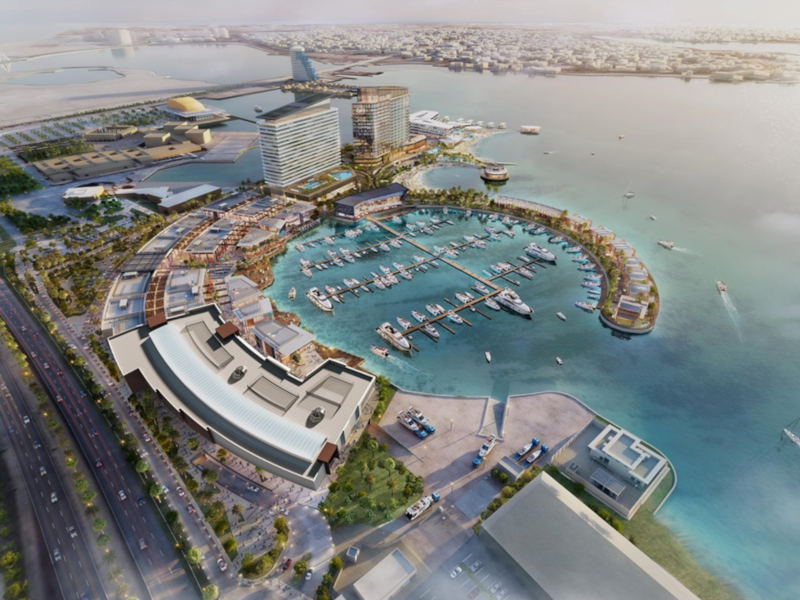
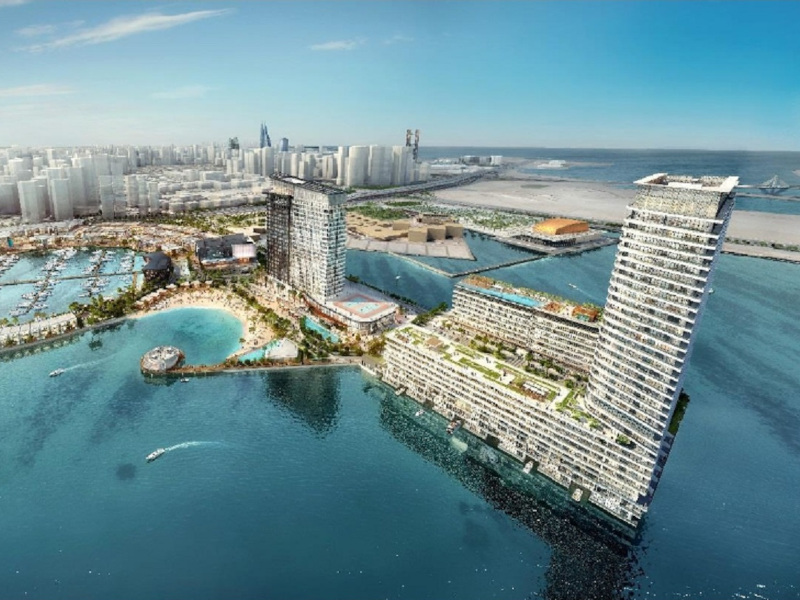
Bahrain Marina is an ambitious waterfront mixed-use development situated in Manama, the bustling capital city of Bahrain. The project is poised to transform an underutilised area into an authentic urban waterfront neighbourhood, complete with a private beach and a plethora of amenities.
The project is estimated to cost BD200m ($530.63m), with the initial development phase alone commanding an investment of BD92m ($244.13m).
Recommended White Papers

Recommended Buyers Guides

Strategically located on the eastern coastal strip of Manama, Bahrain Marina promises to seamlessly integrate the city’s business sectors, traditional souqs, tourism, and cultural districts, fostering a unique sense of community.
The development is spearheaded by Bahrain Marina Development, a wholly owned subsidiary of the Social Insurance Organisation (SIO). Construction commenced in November 2023 with the laying of the foundation stone.
Bahrain Marina is envisioned to become a landmark lifestyle destination in Bahrain, playing a pivotal role in one of the strategic development projects aimed at diversifying Bahrain’s economy.
It is expected to significantly contribute to the strengthening of the real estate development sector, bolstering the country’s non-oil GDP.
Bahrain Marina details
Occupying an expansive area of more than 256,000m², the project will predominantly feature residential units, hotels, retail spaces, beaches, and a variety of water sports activities.
Designed with inclusivity at its core, Bahrain Marina is designed with inclusivity at its foundation with innovative new concepts for social gatherings and events, as well as creative spaces that reflect the rich history and spirit of Bahrain.
The Marina Club building, the Corniche, a selection of various stores and restaurants, and the sea promenade were all designed to reflect the history and spirit of the nation’s heritage.
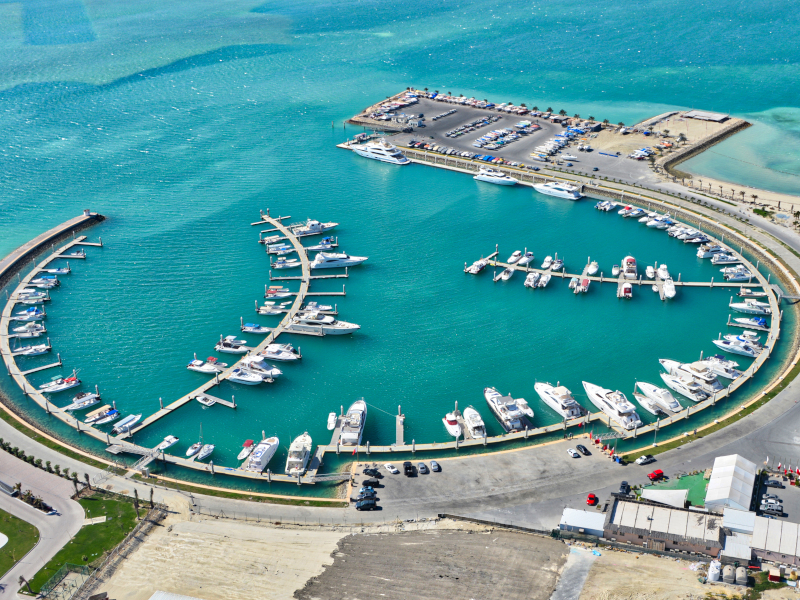
The Bahrain Marina development is expected to emerge as a key destination for both permanent and temporary residences. The development will offer 274 freehold homes, 304 deluxe hotel rooms, and 1,769 underground parking spaces. Additionally, Bahrain Marina will feature 182 berths, catering to yachts and boats.
Residential offerings at Bahrain Marina
The residential options at Bahrain Marina will encompass apartments, penthouses, and duplexes, with waterfront residences providing an array of choices from spacious studios to one-, two-, and three-bedroom apartments.
Residents will have exclusive access to a Recreation Level, complete with a state-of-the-art gym, sauna and steam rooms, a squash court, a theatre, a games room, a children’s playroom, a multi-purpose room, an indoor swimming pool, and an outdoor swimming pool area.
Bahrain Marina hotel and retail components
The Bahrain Marina Hotel will be a five-star establishment within the project, with a total area of 68,637m².
A private beach and waterfront lodging created with high-quality fittings and furnishings will complement the beachfront lifestyle.
The hotel resort will encompass branded residential apartments, and hospitality units, including floating villas. The resort will also feature several amenities such as restaurants, a sunset lounge, a beach club, a spa, and a modern art gym.
In April 2018, Bahrain Marina Development announced the appointment of the Hong Kong-based Shangri-La Hotels and Resorts as Bahrain Marina’s hotel operators.
Bahrain Marina will be home to 192 retail units, comprising international shops, restaurants, cafés, and a commercial complex that will host 33 stores. A wide range of shops and stores will be dotted along the boardwalk overlooking the sea, providing an unparalleled shopping experience.
Recreational spaces at Bahrain Marina
Bahrain Marina will feature a 3,200m² marina clubhouse, complete with entertainment activities and marine programmes.
The Yacht Club will be a members-only establishment, featuring a lobby designed to evoke a nautical atmospheric impression of light and spaciousness.
Contractors involved
Nass Contracting, a subsidiary of Nass Corporation, has been appointed as the principal contractor for the Bahrain Marina development project.
Bahrain-based Mohamed Salahuddin Consulting Engineering Bureau (MSCEB) is tasked with overseeing the architecture, design engineering, and construction supervision.
Benoy, an architecture and master planning firm based in the UK, crafted the master plan for the project.
In 2016, Al Hassanain Contracting was awarded a contract to manage the marine works for Bahrain Marina. The contract encompasses a comprehensive range of enabling and marine-related tasks, including dredging, land reclamation, earthworks, shore protection, quay walls, and culvert crossings.
Arab Architects provided the design services for the residential buildings.