
Brooklyn Atlantic Yards is an ambitious new multi-use development in New York City. It features sporting facilities, office towers and diverse residential units that will provide a massive boost for the local community and the city as a whole.
Recommended White Papers

Recommended Buyers Guides

The site for Brooklyn Atlantic Yards is next to the Atlantic Terminal, the third-largest transportation hub in New York City, at the intersection of nine subway lines and the Long Island Rail road. This was one of the key factors in the choice of location, and gives the project the opportunity to generate revenue for the local community.
During the next ten years, New York City will see a new community of residents and businesses springing up in Brooklyn Atlantic Yards, based around a major new sporting arena in the heart of Brooklyn. The network of multipurpose sporting facilities, office towers and residential units are set to give the area a complete facelift and rejuvenate the local economy.
When Bruce C Ratner, president and CEO of developer Forest City Ratner Companies (FCRC), announced in January 2004 that his bid for the Nets basketball franchise had been accepted, it paved the way for the first phase of the Brooklyn Atlantic Yards project. Construction, however, stalled due to economic reasons and lawsuits from those who opposed the project.
In May 2010, Russian billionaire Mikhail Prokhorov purchased the Nets basketball team under a $200m deal with FCRC. The deal provided the much needed investment required for the project.
Public-private partnership financing
A public-private partnership will fund the project. The total cost of the project is estimated to be $4.9bn. FCRC arranged green cards for 498 Asian investors in exchange for $500,000 to invest in the project. It also made a $400m deal with Barclays Bank to build the Barclays Center arena.
Concept for the Brooklyn Atlantic Yards project
The design for the project was originally developed by Frank Gehry of Gehry Partners. In June 2009, Gehry Partners was replaced by Ellerbe Becket (now part of AECOM). The design developed by Frank Gehry was estimated to cost nearly $1bn while Ellerbe Becket’s design cost $200m less.
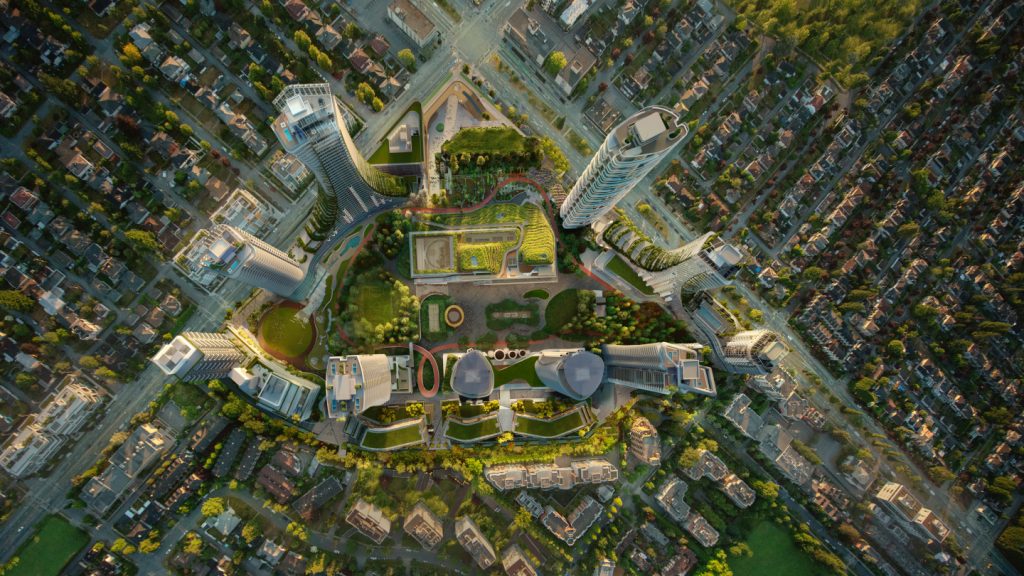
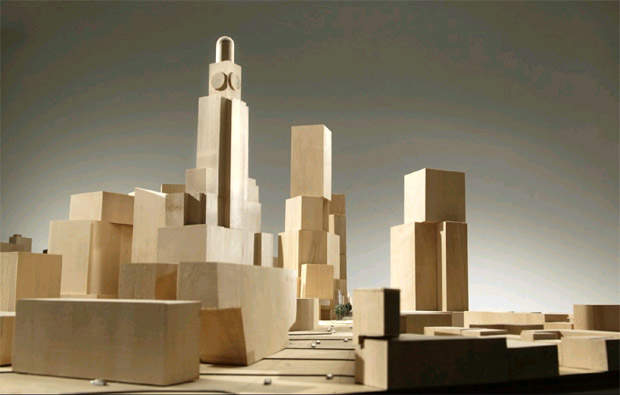
The multi-use project will be spread across an area of 22 acres. It will comprise of a 32-storey mixed income residential complex, a commercial space with lifestyle retail outlets, restaurants and bars, an office building, public plazas and the Barclays Center.
Given the scope of this multifaceted project, and its importance for the surrounding community, the designers have had to focus on the synergy of the different elements right from the conceptual design phase, even though the individual elements will be constructed at different stages.
The residential building of the project will include 6,430 units of affordable and market rated housing schemes that will spread across six million square feet in 14 buildings. It is scheduled to be developed as the world’s tallest modular tower. The developer is currently in negotiations for approval of the plan. The modular concept was developed by FCRC to cut down costs.
The housing scheme will be divided into three parts, 20% will be allotted to low income group, 30% and 50% will be reserved for middle income group and for those who will rent it in the market price.
Brooklyn Nets / Barclays Center arena details
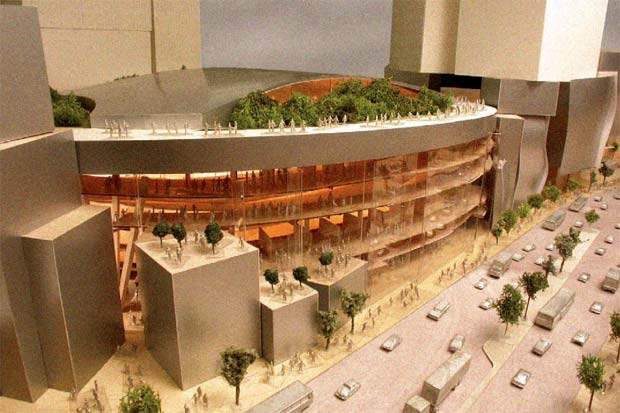
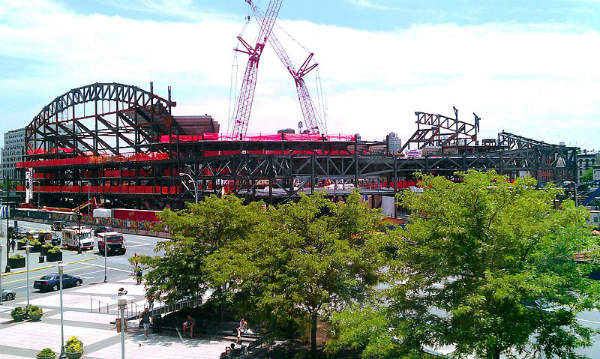
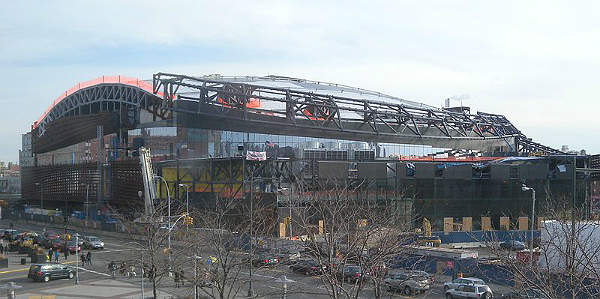
Ellerbe Beckett developed the design of the Barclays Center arena in collaboration with SHoP Architects. As well as providing a home for the Nets, the arena will be available to local youth athletic groups and schools as a sporting venue, and will also be a venue for concerts, community events and family entertainment.
The 675,000ft2 arena is due to open in September 2012. It will be the main attraction of the site and convert Brooklyn into a sporting village. The Barclays arena will be built in a way to accommodate the other structures within the plan.
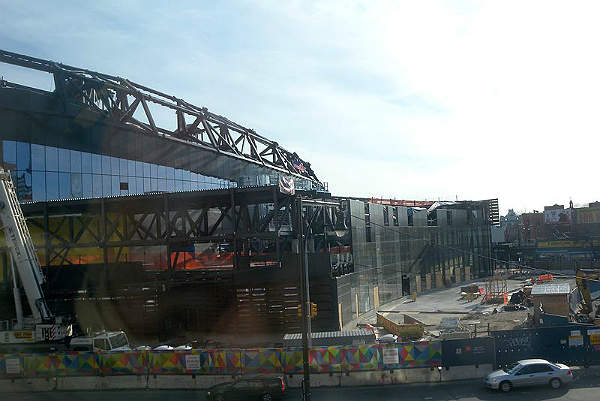
The design of the arena comprises of three independent but interlinked bands. The first band includes a weathered steel exterior which rises and falls to create a sense of transparency. This band cantilevers into a canopy, located 30ft above the ground, at the Flatbush Avenue. The second layer is a glass band which helps the structure to blend with the surrounding and permits visitors to view the interiors. The third layer is also made of weathered steel and surrounds the roof.
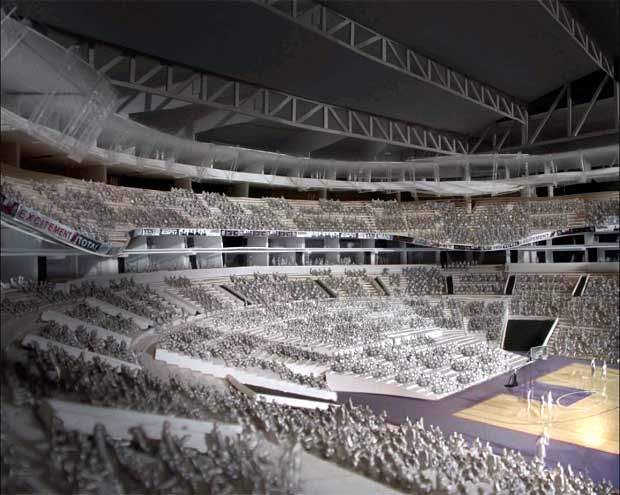
The main concourse of the arena will have a platform from where the sports stage and seating space of the arena can be viewed. The arena will have 18,000 seats for a match and 19,000 for hosting concerts. There 100 luxury suites, practice space for Nets team, double-countered bars, clubs and eateries within the arena.
The interiors of the Barclays Centre will be designed by SHoP Architects. Minimum colours and industrial materials will be used to give a sophisticated look to the interiors.
Key players involved with the ambitious development
The Brooklyn Atlantic Yards project is led by FCRC, which has been instrumental in the revitalisation of downtown Brooklyn during the last 20 years. It has previously backed the construction of One Pierrepont Plaza, the first new office building in the area since the 1960s, and the MetroTech Center, a $1bn, seven million square foot office, academic and high-tech development comprised of 14 buildings.
Forest City Enterprises, of which FCRC is an affiliate, is a £5.7bn NYSE-listed real-estate company based in Cleveland and specialising in the ownership, development, acquisition and management of commercial and residential real estate in the USA.
FCRC is a vertically integrated, full-service real estate firm that mainly develops for its own portfolio. It has backed projects in all five boroughs of New York City.
Olin Partnership are the landscape architects, the structural engineer is Thornton-Tomasetti Group and the mechanical, electrical and plumbing engineer is Flack+Kurtz.
Brooklyn’s open spaces and public areas
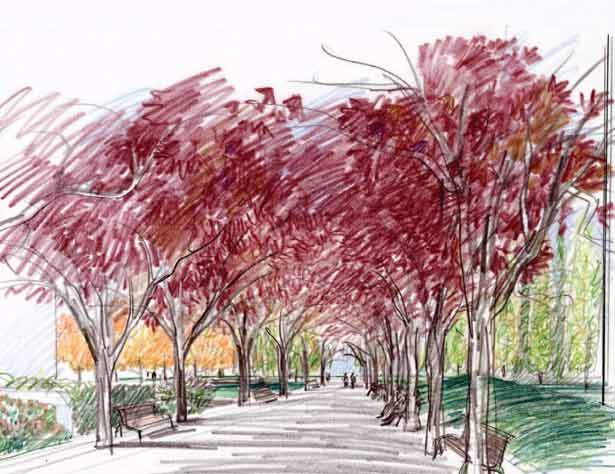
The tree-lined neighbourhood of Brooklyn will see a complete change. Hardware and orthopaedic product stores located at the site will be replaced with lifestyle stores. The commercial space will spread across Prospect Heights, Park Slope, Boerum Hill and Fort Greene. The plan also includes an eight acre open space including a public plaza comprising of a hub and seating place.
Related content
New Museum of Contemporary Art, New York, United States of America
Ever since 1977, when Marcia Tucker founded the New Museum of Contemporary Art in a nondescript office space, Manhattan’s sole contemporary art museum has had a reputation for presenting edgy work.
Brooklyn Supreme and Family Courthouse, New York, US
Brooklyn Supreme and Family Courthouse is an important element in New York’s courthouse renovation and construction.