
The brief was to design a school building that would do more than just reflect the strong Indian ethos and heritage. The aim was to also offer a space of peace and tranquillity suitable for learning.
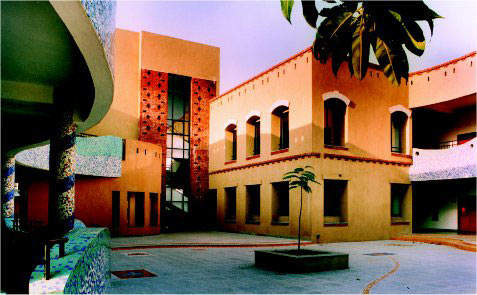
The original Nalanda – India’s first university founded in the 5th century – was used as an example to build upon. Wide-open courtyards, corridor spaces, shaded classrooms, jalis and pergolas offer a seamless harmony between the building, its environment and the learning facility within.
Recommended White Papers

Recommended Buyers Guides

The core concept of the plan is a central courtyard with four smaller internal courtyards, each of these courtyards containing a cluster of four classrooms. This ensures that children have a sense of their own indoor and outdoor space where they can be close to nature growing vegetables and nurturing their plants.
They also learn to take care of their courtyard and keep their own immediate environment clean, which fosters a sense of responsibility. These courtyard spaces have minimised the use of artificial lighting and ventilation, substantially conserving energy.
NATURAL BUILDING MATERIALS
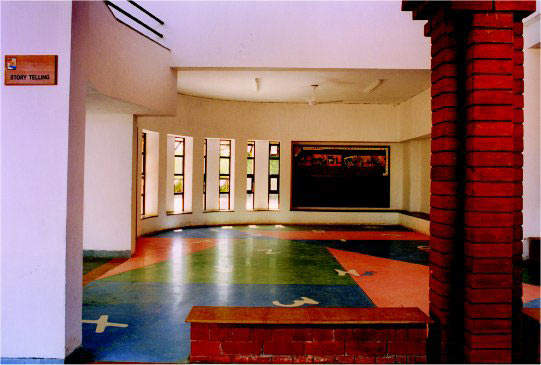
The natural stone floors are cool in both feel and colour, and in some areas patterned cement flooring has been used. In the dry hot climate of Baroda the red brick building with its terracotta tiled roof has been designed to stay as cool as possible. This is managed without any air-conditioning or expensive materials such as glass and aluminium.
Brick piers and vaults are constructed using local bricks by local craftsmen who bring back traditional methods of construction. Brick works as a structural material and not just as a decorative cladding. Cavity walls in the classrooms keep out the summer heat and the winter cold.
The relationship between architecture and the environment continues to be a complex interaction of site, technology, climate and other natural forces, building materials and the human presence. The building form has been carefully designed, both in plan, section and elevation.
Materials that are relevant to the site have been used and the aim is to have created a school that has purpose beyond the boundaries of the brick and stone.
The Nalanda International School was awarded a special commendation by the LEAF 2006 judges in recognition of its use of traditional methods of environmental control.