
The Paradise Project is a massive regeneration programme implemented in the centre of Liverpool, UK, to provide a new face to Europe. The project transformed the city into the European Capital of Culture in 2008. Liverpool has had a chequered reputation in the past but has now confounded its critics and shines at the heart of the European cultural scene, much as Glasgow had done before in 1990.
The Paradise Project was an innovative £920m urban regeneration project that transformed the city centre. The site, known as Liverpool ONE, includes six distinct districts and hosts the best retail brands, residential and leisure facilities.
Recommended White Papers

Recommended Buyers Guides

Paradise Project timeline
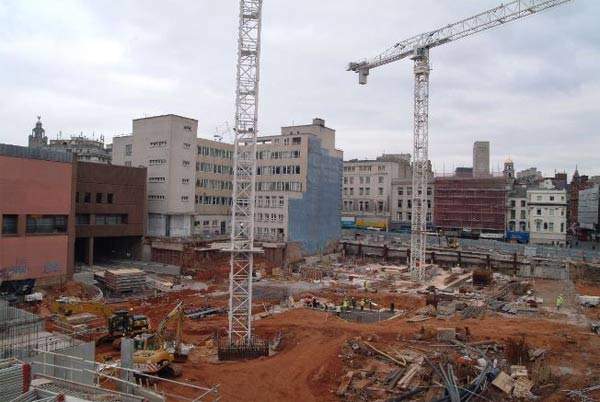
Grosvenor was selected as the developer for the project in March 2000. The planning authority approved the planning application filed by Grosvenor in December 2002. Detailed designing work started in early 2004, which was followed by the start of construction in late-2004.
Public events were held as part of the Year of Culture in the Paradise Street development area during early 2008. Phase one of the project was opened as Liverpool ONE in mid-2008, and the second phase opened in late 2008.
Design details
Liverpool ONE has been designed as an open street centre rather than a conventional, covered shopping space. It is spread across South John Street, Paradise Street, Peter’s Lane, Hanover Street and the Leisure Terrace. The design of the area integrates Liverpool’s historical architecture with its modern buildings.
Liverpool ONE facilities
The developer, Grosvenor identified two areas that the Paradise Project addresses; improving the range of shops available and making significant enhancements to the city centre environment. The 42-acre site contains 30 newly commissioned buildings, designed to sit comfortably alongside Grade II listed buildings. It features 165 new shops, 600 new apartments, two hotels (one luxury, one budget), and leisure and entertainment facilities, including a 14-screen Odeon cinema.
It also includes offices, restaurants, cafés, bars and car parking for more than 3,000 cars. A new public transport (bus) interchange facility is also available.
The 1.65 million square feet, open-air complex also includes an indoor adventure golf course and a revitalised five-acre park.
Public transport interchange
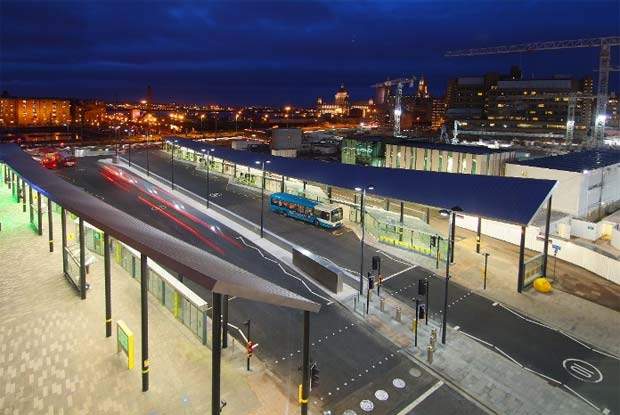
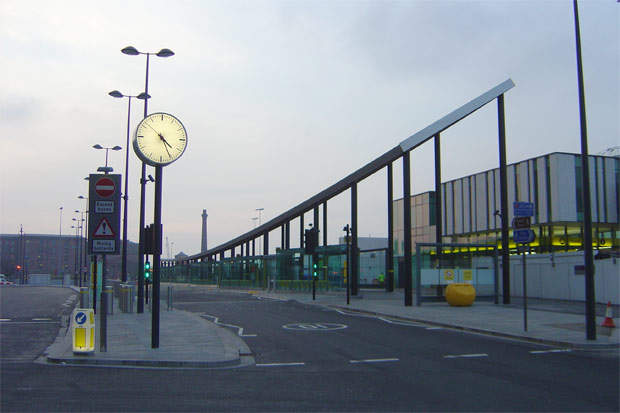
The new bus interchange was the first part of the Paradise Project to open. The interchange opened in November 2005 opposite the Merseyside Police headquarters. It has a dedicated travel centre and a nearby multi-storey car park.
The new central interchange handles around ten million passengers a year. The new interchange features a roof cover consisting two waves of stainless-steel plate supported by sustainable timber roofing.
An added security measure at the interchange is the security doors, which automatically open when buses arrive at the bays.
Contractors involved
In 1998, Liverpool City Council appointed Cushman & Wakefield, a commercial real estate firm, to carry out a retail feasibility study for Liverpool City Centre. The firm proposed a redevelopment plan for the city centre based on its findings.
BDP was selected as the concept architect for the retail regeneration project.
Laing O’Rourke was the construction partner on the project and was responsible for the design and site operations. The construction of John Lewis and Debenhams stores, a new BBC broadcasting facility, a car park, luxury apartments and the interchange were built by Laing O’Rourke.
Laing O’Rourke’s in-house companies, namely Expanded Group, Infrastructure, Crown House Technologies, Select Plant, Malling and Vetter, also collaborated on the project.
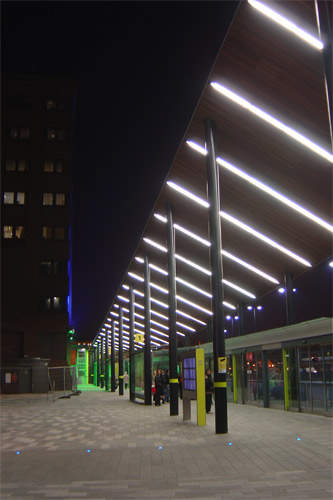
Spanish firm LAMP was selected to supply the lighting systems for the new bus interchange. Elements include the basic family of modular lighting systems for fluorescent lamps and the elliptical shape provided a perfect fit for environments such as the interchange.