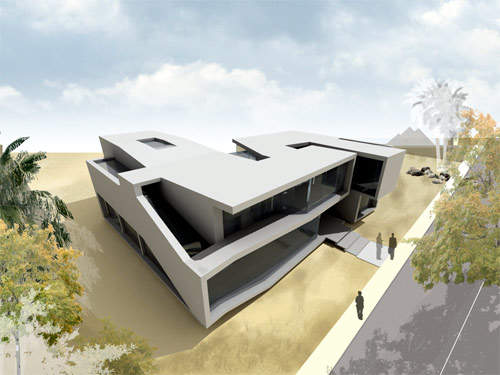
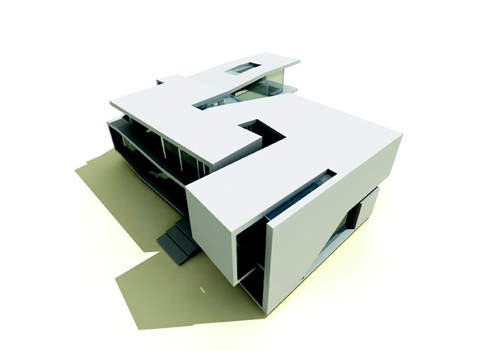
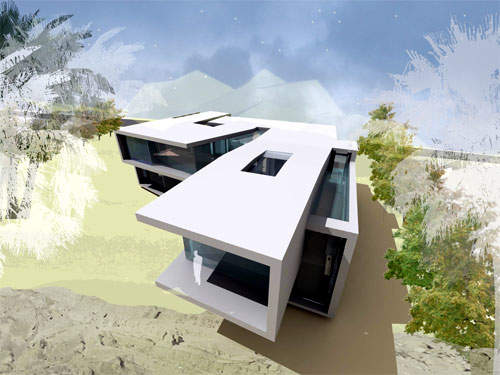
This concrete, steel and glass villa overlooks the three grand pyramids of Giza plateau, Egypt. The design model of this house is organised into two interweaving volumes, connecting in different points that become shared spaces.
Formally, the spatial interplay of the interior creates four loosely defined quadrants of the house: the formal living space for social events located on the upper floor to secure a decent vista for such an incredible view; the indoor pool and related activities underneath, the family room kitchen and bathroom on the ground floor to have a better connectivity with the garden and finally the three bedrooms on the upper floor.
Recommended White Papers

Recommended Buyers Guides

PYRAMID LIVING
One volume clings to the ground facing the surrounding palm tree groves; the other detaches itself from the ground towards a better view of the pyramids while leaving room underneath for a covered terrace space and indoor pool. A ramp connects the entrance lobby to the formal living space on the second floor.
The bathroom, kitchen and family room are clustered in the right wing (horizontal axis) of the house on the ground floor, leaving the indoor pool and related activities on the left part (vertical axis) of the house.
The site was once used for stone extraction; the earth is hard and rocky, the stones are white Egyptian stones known as pharaonic stone. There are three types of materials used in the project: the white stone with a rough texture; a kind of paste made from a mixture of coloured pigments, straws and cement; and wood (mostly from palm trees).
The façades will be covered by slabs of white stone, from the ground level all the way up to the second floor. The concrete slab sheets which are flowing around the house will be covered with a thin layer of the paste.
NATURAL MATERIALS
The third material to be used is leaves of palm trees, which have for a long time been used to make vegetables baskets for shipping. The leaves have a stiff and straight core and an approximate length of 120cm; they will be used in different parts of elevations creating screens for privacy and shading purposes.
They will also be used in the interiors in the false ceiling to cover mechanical ducts and interact with the light.
The cost of the house is reasonable because it is based on the use of inexpensive local materials. These materials are mostly used in vernacular architecture and are suitable for poorer residents.